

Updated June 2026
It’s funny who ends up buying an electric car.
I bumped into an old work colleague recently – the last person you’d expect to be driving one. He wouldn’t exactly be the type you’d picture rinsing out yoghurt pots or separating cardboard from plastics.
But there he was, telling me he’d made the switch. I’d only have been more shocked if he’d revealed he’d become vegan.
And when I asked why, it wasn’t anything to do with the environment or the tech. It was simple enough – fuel costs, and the feeling that things could spike again at any point.
That stuck with me, because it’s not just him.
Electric car sales have been rising sharply again in Ireland, and a lot of that is being driven by the same thing – uncertainty around energy costs, both at home and on the road.
And what’s interesting is what’s starting to happen alongside it. More homeowners aren’t just switching how they drive – they’re starting to look at how they power that driving as well.
Electric Cars Demand Is Rising Again – And There’s a Reason for It
There’s been a noticeable shift in the Irish car market in recent months.
Electric vehicle sales are growing quickly again in 2026, with EVs now making up a significant share of new registrations and continuing to rise year-on-year, as highlighted in recent RTÉ coverage.
That’s not just happening in Ireland either.
Across mainland Europe, electric vehicle sales jumped by more than 50% in a single month earlier this year, with rising petrol and diesel prices – linked to global tensions – seen as a key driver behind that surge.
The economics of EV ownership may also become even more attractive for some households following the Government’s announcement of a new EV scrappage scheme in June 2026. For eligible motorists replacing older petrol or diesel vehicles with a new electric vehicle, support of up to €8,500 is now available through a combination of grants and scrappage incentives.
That’s not a coincidence. When the cost of fuel becomes unpredictable, people start looking for alternatives.
The Real Cost of Petrol and Diesel
For years, the cost of driving was relatively predictable. Now, it’s anything but.
Petrol and diesel prices are tied to global oil markets, which means they can change quickly – often driven by geopolitical events, supply disruptions, or shifts in demand.
We’ve seen that play out again recently, with volatility returning and costs creeping upwards.
And unlike electricity bills, fuel costs are felt straight away – every time you fill the tank.
What It Actually Costs to Run an Electric Car
Electric cars are often cheaper to run – and in many cases, noticeably so.
Charging at home can cost significantly less per kilometre than petrol or diesel, which is one of the main reasons more people are considering the switch.
But it’s not completely separate from the wider energy system. If electricity prices rise, the cost of charging rises too.
So while EVs reduce your reliance on fuel, they still leave you exposed to electricity markets – which, as we’ve seen, can also be unpredictable.
Where Solar Changes the Equation
This is where solar panels start to make a real difference.
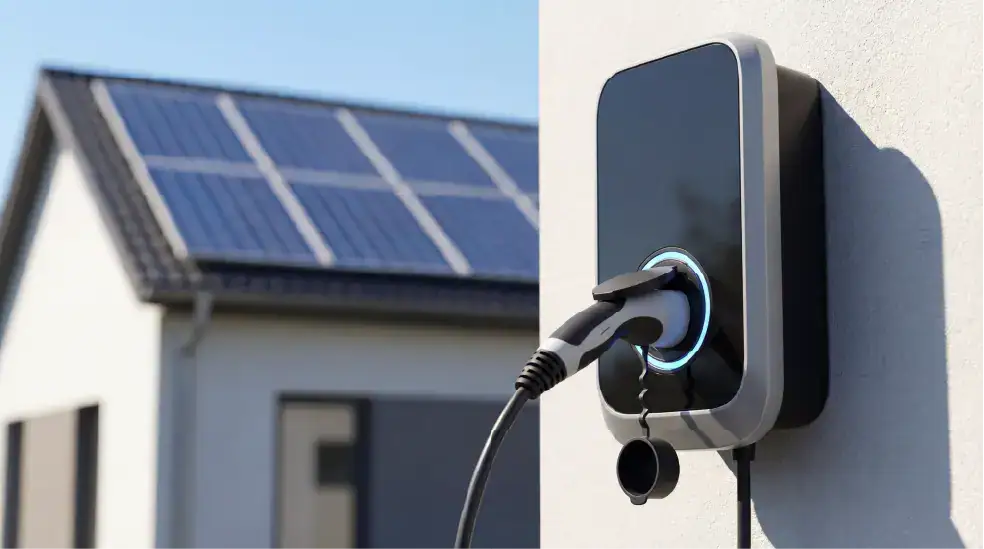
Instead of relying entirely on the grid to charge an electric car, solar allows you to generate some of that electricity at home.
In practical terms, that means part of your driving cost is no longer tied to petrol or diesel – and not fully exposed to electricity price increases either.
You’re effectively using daylight to power part of your driving.
It doesn’t remove costs entirely, but it shifts a portion of them into something far more stable.
Why People Are Starting to Think About Both Together
What’s changing isn’t just how people power their homes – it’s how they think about energy altogether.
Recent commentary, including coverage in RTÉ and analysis in the Irish Examiner, points to a broader shift. Households are starting to look at energy as a whole system, rather than separate costs.
In the past, the car and the house were two different conversations. Now, they’re starting to overlap.
An electric car increases your electricity usage. Solar panels reduce how much of that electricity you need to buy.
So instead of just switching from petrol to electric, many homeowners are starting to look at the bigger picture such as how much energy they use, where it comes from and how much of it they can actually control.
It’s Not Just About Savings — It’s About Predictability
Cost still matters, of course, but increasingly, the bigger driver is predictability.
Fuel prices can spike. Electricity prices can fluctuate. Both are influenced by factors outside your control.
Solar doesn’t remove all of that, but it does reduce how much of your day-to-day energy – including driving – is tied to those external pressures.
And for many people, that stability is becoming just as important as the savings.
A Shift That’s Already Underway
This isn’t something that might happen – it’s already happening.
Electric vehicle adoption is accelerating, awareness is higher, and more households are starting to think about long-term energy costs rather than short-term price changes.
At the same time, solar adoption has grown rapidly in Ireland, driven by rising energy costs and the desire for more control.
Put the two together, and it starts to make a lot more sense.
Common Questions About Electric Cars and Solar in Ireland
Are electric cars cheaper to run than petrol or diesel?
In most cases, yes – particularly when charging at home, although costs still depend on electricity prices.
Can solar panels charge an electric car?
Yes – solar panels can generate electricity during the day, which can be used to charge an EV or offset charging costs.
Does solar completely eliminate charging costs?
Not entirely, but it can significantly reduce how much electricity you need to buy from the grid.
Why are more people combining solar and EVs?
Because it reduces exposure to both fuel prices and electricity price volatility, bringing more predictability to overall energy costs.
Thinking About Your Own Energy Costs?
For a lot of households, the conversation is starting to move beyond individual bills.
It’s no longer just about electricity, or heating, or fuel – it’s about how everything connects.
That’s why more homeowners are looking at ways to reduce reliance on external energy sources altogether, whether that’s through efficiency upgrades, solar, or a combination of both.
Activ8 Solar Energies has delivered over 25,000 energy upgrades across Ireland, working with homeowners to design solar systems around real usage patterns, Irish homes, and available SEAI supports – helping reduce reliance on the grid and bring more stability to long-term energy costs.