
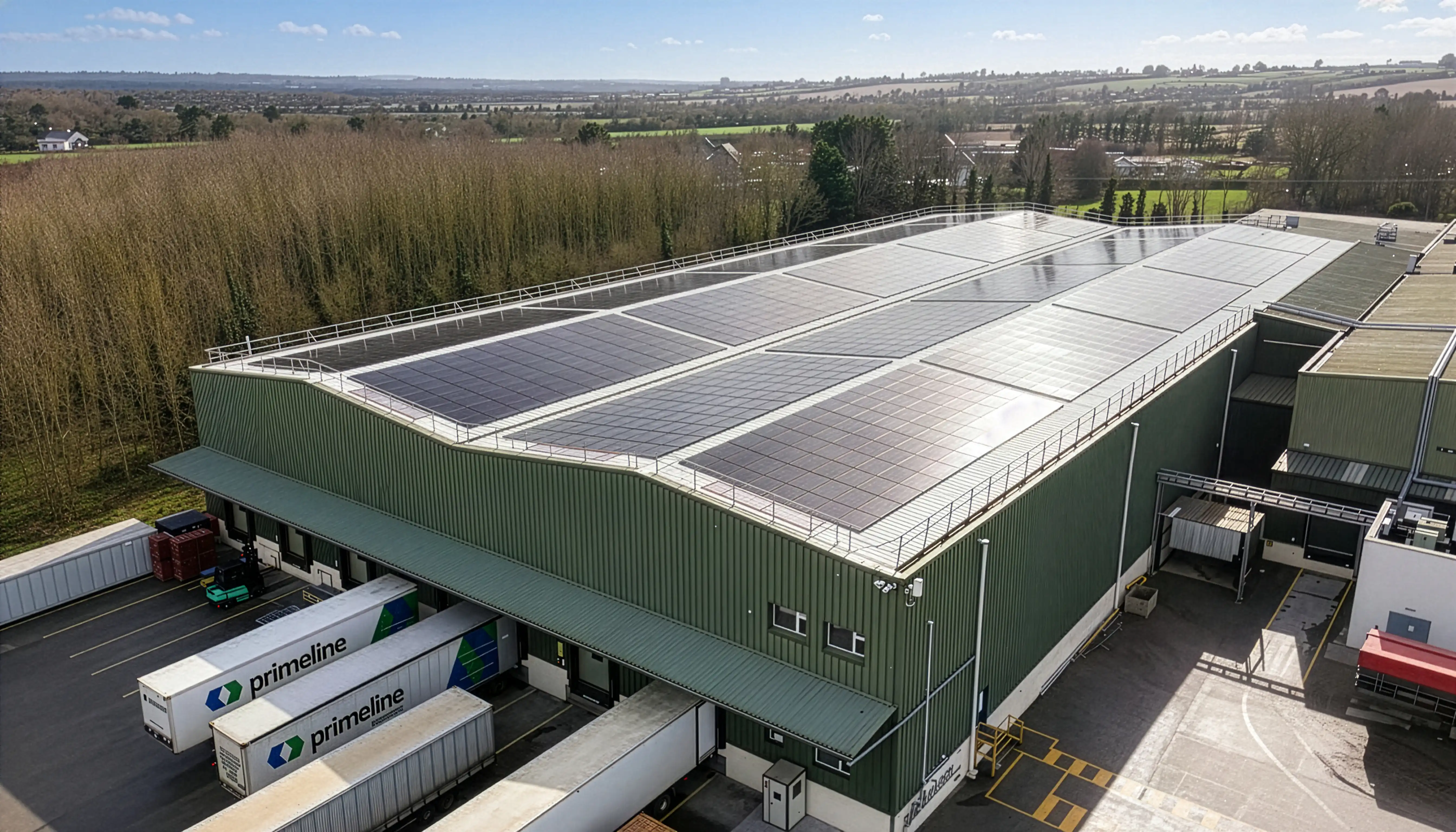
Activ8 Solar Energies has announced the commissioning of a major rooftop solar installation at the Tayto Snacks production facility in Ashbourne, Co. Meath, representing an investment of over €1.17 million. The project marks Tayto’s largest renewables investment to date and a significant step towards onsite renewable energy generation.
The system now supplies approximately 10% of Tayto’s annual power demand and is expected to generate around 667 MWh annually. This will reduce carbon emissions by an estimated 146.17 tonnes of CO₂ per year.
The project comes as Irish manufacturers face rising electricity costs, grid constraints and tightening climate targets, accelerating a shift towards onsite generation as businesses seek greater control over energy supply.

“This project demonstrates what’s possible when iconic Irish brands take decisive action on sustainability,” said Ciaran Marron, CEO of Activ8 Energies. “Onsite generation is increasingly becoming core infrastructure for manufacturers. We’re proud to support Tayto Snacks in building long-term energy resilience while reducing carbon exposure.”
John O'Connor, Managing Director at Tayto Snacks commented: “This investment marks a major step forward in strengthening our energy resilience while reducing our carbon footprint. Generating over 667 MWh of clean electricity onsite each year, this installation directly supports Ireland’s climate ambitions and reinforces our long-term commitment to sustainable manufacturing”.
The rooftop system comprises 1,734 solar panels and uses Activ8’s ATLAS Duo N-Type bifacial solar panels, designed to maximise efficiency and reliability in Irish weather conditions
Representing Sustainable Energy Authority of Ireland (SEAI), Declan Meally, Director of Business, added: “This project showcases Irish businesses leading the way in renewable energy. Generating 10% of the site’s energy from rooftop solar here at Tayto Snacks is a significant achievement, and SEAI is proud to support it. Activ8, working in partnership with SSE, has delivered a strong model that more businesses should follow.”
The initiative was supported by grant funding from SEAI under the Non-Domestic Microgeneration Grant (NDMG) scheme. Planning and development for the project began in December 2024, with onsite works commencing in March 2025. The system is now fully commissioned and operational.
Click the button to return to our blog