
When people talk about installing solar panels in Ireland, the conversation usually starts with electricity bills.
Someone has seen a neighbour’s panels go up, or they’ve heard about the SEAI grant, and the first question is almost always about savings. But it doesn’t take long before another thought creeps in – usually from someone thinking a little further ahead, “What would it do for the value of the house?”
It’s a very Irish way of looking at things. Homes here aren’t just places to live; they’re long-term investments. Any upgrade, whether it’s an extension, new windows or a heating system, tends to be viewed through the same lens. If we put money into the house, will it come back to us someday?
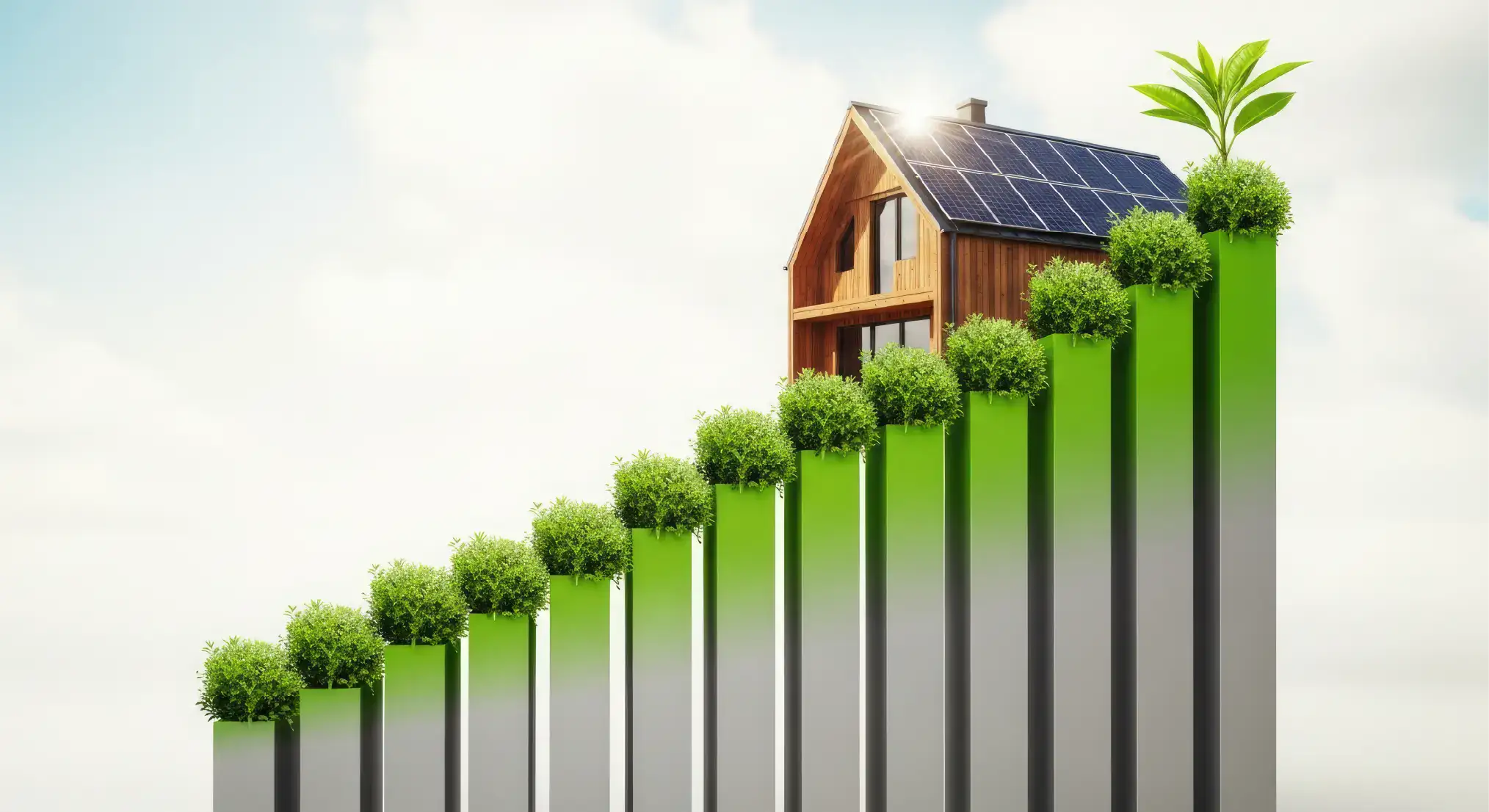
Solar panels fall into that same category. They’re primarily installed to reduce electricity costs and improve energy efficiency, but they can also influence how a property is viewed when it eventually goes on the market.
Why Energy Efficiency Is Starting to Influence House Prices
Energy efficiency has quietly become one of the more important features buyers look at when viewing homes in Ireland.
A decade ago the BER certificate was something many people barely glanced at. Today it’s often one of the first things buyers notice when browsing property listings. That’s largely because running costs have become such a major concern.
Homes that are cheaper to heat and power naturally become more attractive.
Research and property commentary in Ireland increasingly link improvements in a home’s Building Energy Rating with higher resale values. An Irish Independent report examining energy upgrades noted that improving the energy efficiency of a home can significantly increase its value, reflecting the growing demand for properties that are cheaper to run.
Solar panels often play a role in those improvements because they generate electricity directly on the property and reduce reliance on the grid.
How Solar Panels Influence a Home’s BER Rating
Solar PV panels produce electricity from daylight, which means the home needs to buy less electricity from the national grid.
In Ireland’s BER system, that matters because energy ratings are calculated partly on how much primary energy a house consumes. Generating electricity on the roof improves that overall efficiency.
Because of this, installing solar panels can contribute to improving a property’s BER rating. Higher ratings tend to appeal to buyers because they signal lower running costs and a home that has already been upgraded for modern energy use.
For someone comparing two otherwise similar houses, a stronger BER rating can make one property feel like the safer long-term option.
Buyer Expectations Are Changing
Another factor influencing property value is simply how common solar panels have become.
Drive through many housing estates in Ireland now and it’s clear the technology is no longer unusual. Panels are appearing on everything from new builds to older dormer bungalows and farmhouses.
That familiarity matters. When buyers see solar panels today, they’re less likely to view them as a novelty and more likely to see them as a practical feature. The assumption is that the home will be cheaper to run and already a step ahead in terms of energy upgrades.
While writing this, I asked a local estate agent whether solar panels really add value to a house. His answer was short and to the point: “Of course they do.”
Homes that include renewable energy technologies are increasingly seen as more future-proof in a market where energy costs remain unpredictable.
Solar Panels and Long-Term Value
It’s important to keep the impact in perspective. Solar panels do not automatically increase a property’s value by a fixed percentage.
What they tend to do instead is strengthen the overall appeal of the house. Buyers often recognise that a property generating its own electricity comes with ongoing financial benefits.
Solar panel systems also have a long lifespan. Most modern panels are designed to operate for twenty-five years or more, meaning a significant portion of that lifespan will remain for any future owner.
That remaining generation potential can make the property more attractive, particularly when energy costs remain a regular topic in Irish households.
Studies examining solar installations internationally suggest homes with solar panels can sometimes sell for several percent more than comparable homes without them, largely due to the expected energy savings.
Solar Panels Are Usually Part of a Bigger Upgrade
In reality, solar panels rarely exist in isolation.
Many homeowners who install solar also begin looking at other improvements such as insulation upgrades, heat pumps or battery storage. When those upgrades are combined, the result is often a home that is not only cheaper to run but also significantly more energy efficient.
That’s increasingly how energy upgrades are approached in Ireland today. Through the SEAI One Stop Shop programme, companies like Activ8 Energies assess how a house uses energy as a whole before recommending changes. Solar panels can then form one part of a wider plan designed to improve efficiency and long-term comfort.
When viewed in that broader context, the impact on property value often becomes clearer.
Do Solar Panels Add Value to an Irish Home?
The simplest answer is that solar panels can contribute to property value, but not in a guaranteed or easily measurable way.
They improve energy efficiency, help strengthen BER ratings and make a property more appealing to buyers who are conscious of energy costs. As more homes adopt renewable technologies, those advantages are becoming easier for buyers to recognise.
For most homeowners, however, the real benefit appears long before the house ever goes on the market. Solar panels begin generating electricity from the moment they are installed, reducing reliance on the grid and lowering electricity bills.
If those same panels also make the property more attractive to a future buyer someday, that’s simply an added bonus.